---
title: "Gym Lighting Design: Improve Member Experience & Reduce Energy Costs"
description: Learn how gym lighting design, LED upgrades, CRI optimization and smart controls improve member experience while reducing energy costs in fitness centers.
image: https://blog.budderfly.com/hubfs/gymlights-1280x720.png
---
[Careers](https://omsbdrflyprd.wpengine.com/careers/)
[](https://cta-redirect.hubspot.com/cta/redirect/20472728/b14da822-cd99-48ce-b039-a18781490a06)
[](https://omsbdrflyprd.wpengine.com/)
- [Energy as a Service](https://www.budderfly.com/energy-service/)
- [Equipment](https://www.budderfly.com/energy-service/equipment/)
- [Smart Technology Monitoring](https://www.budderfly.com/our-technology/)
- [How We Innovate](https://www.budderfly.com/energy-service/how-we-innovate/)
- [Measuring & Billing Technology](https://www.budderfly.com/energy-service/measuring-billing-technology/)
- [Who We Serve](https://www.budderfly.com/the-budderfly-effect/)
- [Restaurants](https://www.budderfly.com/the-budderfly-effect/fast-casual-restaurants/)
- [Corporate & Enterprise](https://www.budderfly.com/the-budderfly-effect/enterprise/)
- [Hospitality](https://www.budderfly.com/the-budderfly-effect/hospitality/)
- [Healthcare & Fitness](https://www.budderfly.com/the-budderfly-effect/healthcare-fitness/)
- [Schools & Universities](https://www.budderfly.com/the-budderfly-effect/schools-universities/)
- [Retail](https://www.budderfly.com/the-budderfly-effect/chain-retail/)
- [Convenience Stores](https://www.budderfly.com/the-budderfly-effect/convenience-stores/)
- [Manufacturing](https://www.budderfly.com/the-budderfly-effect/manufacturing/)
- [Resources](https://blog.budderfly.com/)
- [Blog](https://blog.budderfly.com/)
- [Case Studies](https://case-studies.budderfly.com/)
- [Customer Testimonials](https://www.budderfly.com/resources/customer-testimonials/)
- [Thought Leadership](https://info.budderfly.com/)
- [News](https://news.budderfly.com/)
- [About](https://www.budderfly.com/about/)
- [Executive Team](https://www.budderfly.com/executive-team/)
- [Leadership](https://www.budderfly.com/leadership/)
- [Board of Directors](https://www.budderfly.com/board-of-directors/)
- [Mission](https://www.budderfly.com/about/mission/)
[](https://cta-redirect.hubspot.com/cta/redirect/20472728/f27e5725-ac20-4a22-8db5-60c912879eb9)
- [Energy as a Service](https://www.budderfly.com/energy-service/)
- [Equipment](https://www.budderfly.com/energy-service/equipment/)
- [Smart Technology Monitoring](https://www.budderfly.com/our-technology/)
- [How We Innovate](https://www.budderfly.com/energy-service/how-we-innovate/)
- [Measuring & Billing Technology](https://www.budderfly.com/energy-service/measuring-billing-technology/)
- [Who We Serve](https://www.budderfly.com/the-budderfly-effect/)
- [Restaurants](https://www.budderfly.com/the-budderfly-effect/fast-casual-restaurants/)
- [Corporate & Enterprise](https://www.budderfly.com/the-budderfly-effect/enterprise/)
- [Hospitality](https://www.budderfly.com/the-budderfly-effect/hospitality/)
- [Healthcare & Fitness](https://www.budderfly.com/the-budderfly-effect/healthcare-fitness/)
- [Schools & Universities](https://www.budderfly.com/the-budderfly-effect/schools-universities/)
- [Retail](https://www.budderfly.com/the-budderfly-effect/chain-retail/)
- [Convenience Stores](https://www.budderfly.com/the-budderfly-effect/convenience-stores/)
- [Manufacturing](https://www.budderfly.com/the-budderfly-effect/manufacturing/)
- [Resources](https://blog.budderfly.com/)
- [Blog](https://blog.budderfly.com/)
- [Case Studies](https://case-studies.budderfly.com/)
- [Customer Testimonials](https://www.budderfly.com/resources/customer-testimonials/)
- [Thought Leadership](https://info.budderfly.com/)
- [News](https://news.budderfly.com/)
- [About](https://www.budderfly.com/about/)
- [Executive Team](https://www.budderfly.com/executive-team/)
- [Leadership](https://www.budderfly.com/leadership/)
- [Board of Directors](https://www.budderfly.com/board-of-directors/)
- [Mission](https://www.budderfly.com/about/mission/)
[Careers](https://omsbdrflyprd.wpengine.com/careers/)
[](https://cta-redirect.hubspot.com/cta/redirect/20472728/b14da822-cd99-48ce-b039-a18781490a06)
Aug 07, 2026
# How Better Fitness Center Lighting Improves Member Experience and Energy Efficiency
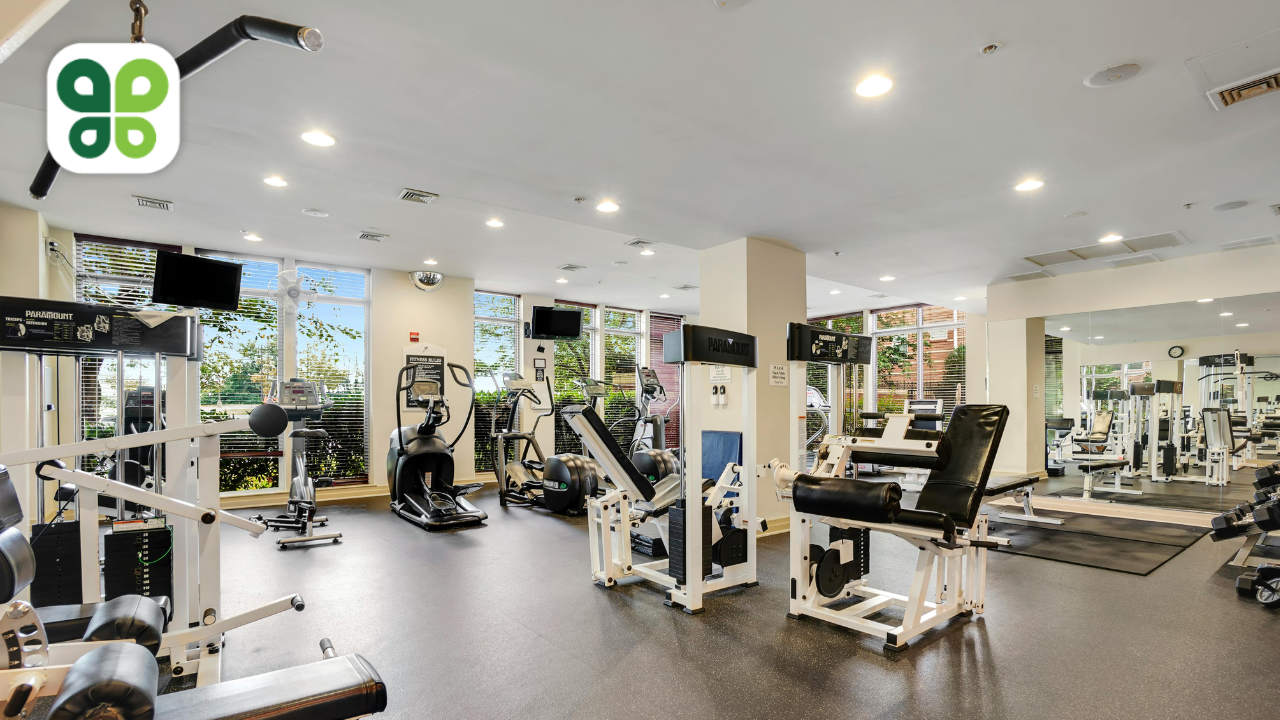
Gym lighting is one of the most important elements of the member experience. From the moment a customer walks through the door, fitness center lighting can affect their comfort, energy, and even motivation levels. The right lighting can make equipment appear more modern, create a sense of cleanliness and safety, and even influence how long members stay in a facility.
For gym owners and operators, lighting also impacts operational costs. Lighting a large facility requires a lot of energy, and especially for gyms with long opening hours, the cost of that energy can add up. Energy efficient upgrades to lights can improve member satisfaction while reducing utility costs.
LED upgrades can dramatically improve illumination consistency while reducing energy use. Compared to older fluorescent or metal halide fixtures, modern LEDs provide better light quality, improved reliability, and significantly lower maintenance requirements. Plus, LED lights use up to 90% less energy and last up to 25 times longer than incandescent bulbs, according to EIA.gov.
For facilities looking to optimize operating costs, lighting improvements are often one of the fastest ways to reduce energy consumption. Learn more about the major drivers of gym utility expenses in our guide to [gym energy costs and utility bill reduction](https://blog.budderfly.com/gym-energy-costs-breakdown-what-drives-your-utility-bills-and-how-budderfly-cuts-them).
## **Designing by Zone: Creating the Optimal Member Experience**
Effective gym lighting design is not a one-size-fits-all approach. Different areas of a fitness center serve different purposes, and each requires its own lighting strategy to support member comfort and facility needs. Creating distinct lighting design across different rooms helps fitness centers deliver a high-quality member experience while maximizing the functionality of each space.
### **High-Intensity Zones (Weight Rooms & Cardio)**
Weight rooms, functional training areas, and cardio spaces benefit from bright, cool-toned lighting that helps members feel energized and focused. Color temperatures between 4000K and 5000K are commonly used to create an atmosphere that supports performance and motivation. Proper fixture placement and more diffused light also helps minimize glare, particularly for individuals lying on benches or looking upward during exercises.
### **Mind & Body Studios (Yoga & Pilates)**
Members using a gym’s yoga, Pilates, and recovery spaces have different goals and need a different lighting strategy to promote mindfulness and relaxation.
These spaces typically perform best with warm, dimmable lighting in the 2700K to 3000K range that helps create a calmer atmosphere while reducing visual distractions.
Dimmable lighting controls provide added flexibility, allowing instructors to adjust brightness levels throughout a session. For example, classes may begin with brighter light and transition to a softer ambiance during meditation or cooldown periods.
### **Locker Rooms & Vanity Mirrors**
Locker rooms are a key part of the member experience, and lighting can have a significant impact on how a changing room feels. Not only can the lights affect perceived cleanliness and hygiene, they can also be a factor in how good members feel after a workout. Many gym-goers are there to work on their health and appearance. The last thing they want is harsh, unflattering lights by the mirror.
Color Rendering Index (CRI) measures how accurately a light source reveals colors compared to natural daylight. High-CRI LEDs, typically rated 80+ and ideally 90+, help members see natural skin tones and colors more accurately. This creates a more comfortable and confidence-inspiring environment in the locker room.
Layered lighting can also help. Rather than relying solely on overhead fixtures, facilities should combine ambient lighting with strategically placed mirror lighting. Proper vanity lighting helps eliminate harsh shadows around the face, improving visibility and creating a more flattering reflection.
## **What Is the Best Lighting for a Gym?**
The best gym lighting combines high-efficiency LED fixtures, appropriate color temperatures, high color rendering (CRI), and smart controls. Weight rooms typically benefit from 4000K-5000K lighting, while yoga and recovery areas perform best with warmer 2700K-3000K lighting. Modern gym lighting systems improve both member experience and energy efficiency.
## **Enhancing Efficiency with Zone Scheduling & Automation**
Modern lighting systems can come equipped with intelligent controls that improve efficiency without negatively affecting the member experience.
### **Zone Scheduling**
Though many gyms operate extended hours, occupancy is not consistent throughout a given day. Zone scheduling gym strategies allow operators to automatically adjust lighting levels based on usage patterns.
For example:
- Group fitness studios can automatically dim between classes.
- Basketball courts can operate at reduced lighting levels when not reserved.
- Meeting rooms and staff areas can follow customized schedules.
- Certain sections of large fitness floors can be adjusted during lower-traffic periods.
Rather than running every light fixture at full output all day, facilities can align lighting usage with actual occupancy.
### **Motion Sensors and Occupancy Controls**
Motion sensors also improve efficiency by ensuring lights in areas that are not used as regularly only operate when needed. Storage rooms, administrative offices, hallways, and maintenance areas benefit from occupancy-based controls, as light can remain off and automatically turn on when someone enters and switch off after a period of inactivity.
The result is lower energy consumption and longer lifespan for lighting equipment, all without requiring staff intervention.
### **Daylight Harvesting**
Another way to improve lighting management strategy is by taking advantage of a free light source coming from the windows: sunshine. Daylight harvesting systems can measure sunlight levels coming in through windows and adjust interior lighting levels accordingly.
When daylight is sufficient, electric lighting energy consumption can be reduced while maintaining brightness throughout the facility. Members enjoy a more natural environment, while operators benefit from energy savings.
## **The Energy Impact: How Outdated Lighting Exacerbates Waste**
Energy costs remain a significant challenge for fitness center operators. Facilities often run long operating hours, maintain extensive HVAC systems, power large amounts of equipment, and provide lighting across substantial square footage.
As discussed in our breakdown of [gym energy costs](https://blog.budderfly.com/gym-energy-costs-breakdown-what-drives-your-utility-bills-and-how-budderfly-cuts-them), utilities can account for a substantial portion of operating expenses, often ranging from 25% to 40% depending on facility size, hours, and equipment usage.
Outdated lighting systems create what many operators experience as a "double penalty." Older lighting technologies consume significantly more electricity than modern LEDs while simultaneously generating excess heat. This means that HVAC systems must work harder to maintain comfortable indoor temperatures. The result is higher lighting costs and higher cooling costs at the same time.
Upgrading to energy efficient gym lighting helps address both issues, as LED bulbs have less electrical demand and generate substantially less heat, adding to HVAC energy savings.
> For a deeper look at commercial LED solutions, visit our guide to [commercial LED lighting](https://blog.budderfly.com/commercial-led-lighting).
## **Upgrading Gym Lighting Without CapEx**
Better lighting leads to happier members, improved retention, and lower operating costs. Despite these benefits, many fitness centers delay energy efficient lighting upgrades because of capital constraints. That’s where Budderfly's Energy-as-a-Service (EaaS) model can help.
Budderfly designs, installs, and maintains energy-saving technologies (including advanced LED lighting systems, intelligent controls, automation solutions, and other energy-efficiency upgrades) with no upfront costs.
Facilities gain access to modern technology, lower energy consumption, and operational improvements while preserving capital for other business priorities.
Ready to upgrade your gym lighting without upfront capital investment? Budderfly's Energy-as-a-Service (EaaS) model provides LED lighting upgrades, advanced controls, installation, and ongoing maintenance with no upfront costs for standard installations. Learn how Budderfly can help improve member experience and reduce energy expenses by [contacting us today.](https://www.budderfly.com/lets-talk/)
## **FAQs**
### How does gym lighting affect member experience?
Gym lighting influences how members perceive cleanliness, safety, comfort, and overall facility quality. Proper lighting can improve visibility, reduce glare, create the right atmosphere for different activities, and help members feel more motivated during workouts, contributing to a better overall fitness experience.
### What color temperature is best for fitness center lighting?
The ideal color temperature depends on the space. Weight rooms, cardio areas, and functional training zones typically benefit from cooler light between 4000K and 5000K to support energy and focus. Yoga studios, recovery rooms, and wellness spaces generally perform better with warmer lighting between 2700K and 3000K.
### Should gyms switch to LED lighting?
Yes. LED lighting typically uses significantly less energy than older fluorescent or metal halide systems while providing more consistent illumination and longer operating life. LED upgrades can help fitness centers reduce utility costs, improve light quality, lower maintenance needs, and enhance the overall member experience.
### Can lighting upgrades improve gym sustainability?
Yes. Upgrading to LED fixtures and implementing intelligent lighting controls can significantly reduce electricity consumption and associated emissions. Lighting improvements are often a foundational step in broader sustainability initiatives and can complement other energy efficiency and renewable energy strategies.
---
### Recent Posts
#### [Commercial Building Energy Storage May Be the Grid's Biggest Opportunity](https://blog.budderfly.com/commercial-building-energy-storage-grid-opportunity)
Oct 13, 2026 11:41:40 AM
#### [5 Key Insights About How Sustainability Impacts Business Performance](https://blog.budderfly.com/new-york-climate-week-leadership-impact-forum-al-subbloie)
Oct 01, 2026 09:59:48 AM
#### [What Is Holding Back the Energy Transition? 10 Challenges Facing Building Owners](https://blog.budderfly.com/what-is-holding-back-the-energy-transition-10-challenges-facing-building-owners)
Sep 25, 2026 09:05:54 AM
### Contact us
Email: [info@budderfly.com](mailto:info@budderfly.com)
Phone: [(855) 299-1334](tel:(855)%20299-1334)
Address: 2 Trap Falls Road, Suite 300
Shelton, CT 06484
### Get updates straight to your inbox:
Subscribe to receive regular updates straight to your inbox.
[](https://omsbdrflyprd.wpengine.com/)
2 Trap Falls Road, Suite 310
Shelton, CT 06484
[(855) 299-1334](tel:855-299-1334)
[](https://cta-redirect.hubspot.com/cta/redirect/20472728/a6496eea-1348-4b02-942b-42039cf68f2c)
-
-
-
-
- - [Energy as a Service](https://omsbdrflyprd.wpengine.com/energy-service/)
- [Who We Serve](https://omsbdrflyprd.wpengine.com/the-budderfly-effect/)
- [Resources](https://omsbdrflyprd.wpengine.com/resources/)
- [Blog](https://blog.budderfly.com/)
- - [In the News](https://news.budderfly.com/)
- [Case Studies](https://case-studies.budderfly.com/)
- [About](https://omsbdrflyprd.wpengine.com/about/)
- [Careers](https://omsbdrflyprd.wpengine.com/careers/)
[](https://www.budderfly.com/)
© 2026 Budderfly
- [Privacy Policy](https://omsbdrflyprd.wpengine.com/privacy-policy/)
- [Accessibility Statement](https://omsbdrflyprd.wpengine.com/accessibility-statement/)
- [Sitemap](https://omsbdrflyprd.wpengine.com/sitemap/)
- [Patents](https://omsbdrflyprd.wpengine.com/patents/)
[](https://cta-redirect.hubspot.com/cta/redirect/20472728/b14da822-cd99-48ce-b039-a18781490a06)
```json
{
"@context" : "https://schema.org",
"@type" : "BlogPosting",
"author" : {
"@type" : "Person",
"name" : "Budderfly",
"url" : "https://blog.budderfly.com/author/budderfly"
},
"dateModified" : "2026-08-07T10:30:47.178Z",
"datePublished" : "2026-08-07T10:30:47.000Z",
"headline" : "Gym Lighting Design: Improve Member Experience & Reduce Energy Costs ",
"image" : [ "https://blog.budderfly.com/hubfs/gymlights-1280x720.png" ],
"mainEntityOfPage" : {
"@id" : "https://blog.budderfly.com/gym-lighting-design",
"@type" : "WebPage"
},
"publisher" : {
"@type" : "Organization",
"logo" : {
"@type" : "ImageObject",
"url" : "https://blog.budderfly.com/hubfs/Budderfly%20logos/Budderfly%20Logo%20w%20tage-2%20copy.png"
},
"name" : "Budderfly"
}
}
```
```json
{
"@context" : "https://schema.org",
"@type" : "FAQPage",
"mainEntity" : [ {
"@type" : "Question",
"acceptedAnswer" : {
"@type" : "Answer",
"text" : "Gyms often run long hours, have high ceilings, and carry heavy humidity loads from showers and workouts—forcing HVAC and ventilation to run harder than most businesses."
},
"name" : "Why is my gym’s electricity bill so high compared to other businesses?"
}, {
"@type" : "Question",
"acceptedAnswer" : {
"@type" : "Answer",
"text" : "Lighting can be a major slice of a gym’s energy use. LEDs cut lighting consumption significantly and reduce heat, which can also lower air-conditioning demand."
},
"name" : "How much can LED lighting actually save a fitness center?"
}, {
"@type" : "Question",
"acceptedAnswer" : {
"@type" : "Answer",
"text" : "Yes—some models (like Energy-as-a-Service) fund high-efficiency HVAC replacements upfront and are paid back through measured energy savings instead of CapEx."
},
"name" : "Can I upgrade my gym’s HVAC without a huge upfront payment?"
}, {
"@type" : "Question",
"acceptedAnswer" : {
"@type" : "Answer",
"text" : "Pools can drive energy costs due to constant filtration and heating. Variable-speed drives plus smart monitoring can reduce pump and heating energy without sacrificing comfort."
},
"name" : "How do swimming pools impact energy costs?"
}, {
"@type" : "Question",
"acceptedAnswer" : {
"@type" : "Answer",
"text" : "Peak demand charges are based on your highest usage spike in a billing cycle. Monitoring and load management can help smooth spikes and reduce demand-related costs."
},
"name" : "What are \"Peak Demand\" charges and how do gyms avoid them?"
} ]
}
```