---
title: The Air Quality Risks of Old HVAC Systems
description: Learn how old HVAC health risks have real effects on people and business and why more and more people are making upgrading theirs a bigger priority.
image: https://blog.budderfly.com/hubfs/Blog-HVAC-Roof-1280x720.png
---
[Careers](https://omsbdrflyprd.wpengine.com/careers/)
[](https://cta-redirect.hubspot.com/cta/redirect/20472728/b14da822-cd99-48ce-b039-a18781490a06)
[](https://omsbdrflyprd.wpengine.com/)
- [Energy as a Service](https://www.budderfly.com/energy-service/)
- [Equipment](https://www.budderfly.com/energy-service/equipment/)
- [Smart Technology Monitoring](https://www.budderfly.com/our-technology/)
- [How We Innovate](https://www.budderfly.com/energy-service/how-we-innovate/)
- [Measuring & Billing Technology](https://www.budderfly.com/energy-service/measuring-billing-technology/)
- [Who We Serve](https://www.budderfly.com/the-budderfly-effect/)
- [Restaurants](https://www.budderfly.com/the-budderfly-effect/fast-casual-restaurants/)
- [Corporate & Enterprise](https://www.budderfly.com/the-budderfly-effect/enterprise/)
- [Hospitality](https://www.budderfly.com/the-budderfly-effect/hospitality/)
- [Healthcare & Fitness](https://www.budderfly.com/the-budderfly-effect/healthcare-fitness/)
- [Schools & Universities](https://www.budderfly.com/the-budderfly-effect/schools-universities/)
- [Retail](https://www.budderfly.com/the-budderfly-effect/chain-retail/)
- [Convenience Stores](https://www.budderfly.com/the-budderfly-effect/convenience-stores/)
- [Manufacturing](https://www.budderfly.com/the-budderfly-effect/manufacturing/)
- [Resources](https://blog.budderfly.com/)
- [Blog](https://blog.budderfly.com/)
- [Case Studies](https://case-studies.budderfly.com/)
- [Customer Testimonials](https://www.budderfly.com/resources/customer-testimonials/)
- [Thought Leadership](https://info.budderfly.com/)
- [News](https://news.budderfly.com/)
- [About](https://www.budderfly.com/about/)
- [Executive Team](https://www.budderfly.com/executive-team/)
- [Leadership](https://www.budderfly.com/leadership/)
- [Board of Directors](https://www.budderfly.com/board-of-directors/)
- [Mission](https://www.budderfly.com/about/mission/)
[](https://cta-redirect.hubspot.com/cta/redirect/20472728/f27e5725-ac20-4a22-8db5-60c912879eb9)
- [Energy as a Service](https://www.budderfly.com/energy-service/)
- [Equipment](https://www.budderfly.com/energy-service/equipment/)
- [Smart Technology Monitoring](https://www.budderfly.com/our-technology/)
- [How We Innovate](https://www.budderfly.com/energy-service/how-we-innovate/)
- [Measuring & Billing Technology](https://www.budderfly.com/energy-service/measuring-billing-technology/)
- [Who We Serve](https://www.budderfly.com/the-budderfly-effect/)
- [Restaurants](https://www.budderfly.com/the-budderfly-effect/fast-casual-restaurants/)
- [Corporate & Enterprise](https://www.budderfly.com/the-budderfly-effect/enterprise/)
- [Hospitality](https://www.budderfly.com/the-budderfly-effect/hospitality/)
- [Healthcare & Fitness](https://www.budderfly.com/the-budderfly-effect/healthcare-fitness/)
- [Schools & Universities](https://www.budderfly.com/the-budderfly-effect/schools-universities/)
- [Retail](https://www.budderfly.com/the-budderfly-effect/chain-retail/)
- [Convenience Stores](https://www.budderfly.com/the-budderfly-effect/convenience-stores/)
- [Manufacturing](https://www.budderfly.com/the-budderfly-effect/manufacturing/)
- [Resources](https://blog.budderfly.com/)
- [Blog](https://blog.budderfly.com/)
- [Case Studies](https://case-studies.budderfly.com/)
- [Customer Testimonials](https://www.budderfly.com/resources/customer-testimonials/)
- [Thought Leadership](https://info.budderfly.com/)
- [News](https://news.budderfly.com/)
- [About](https://www.budderfly.com/about/)
- [Executive Team](https://www.budderfly.com/executive-team/)
- [Leadership](https://www.budderfly.com/leadership/)
- [Board of Directors](https://www.budderfly.com/board-of-directors/)
- [Mission](https://www.budderfly.com/about/mission/)
[Careers](https://omsbdrflyprd.wpengine.com/careers/)
[](https://cta-redirect.hubspot.com/cta/redirect/20472728/b14da822-cd99-48ce-b039-a18781490a06)
Jan 23, 2026
# The Hidden Health Risks of Old HVACs for Employees and Customers
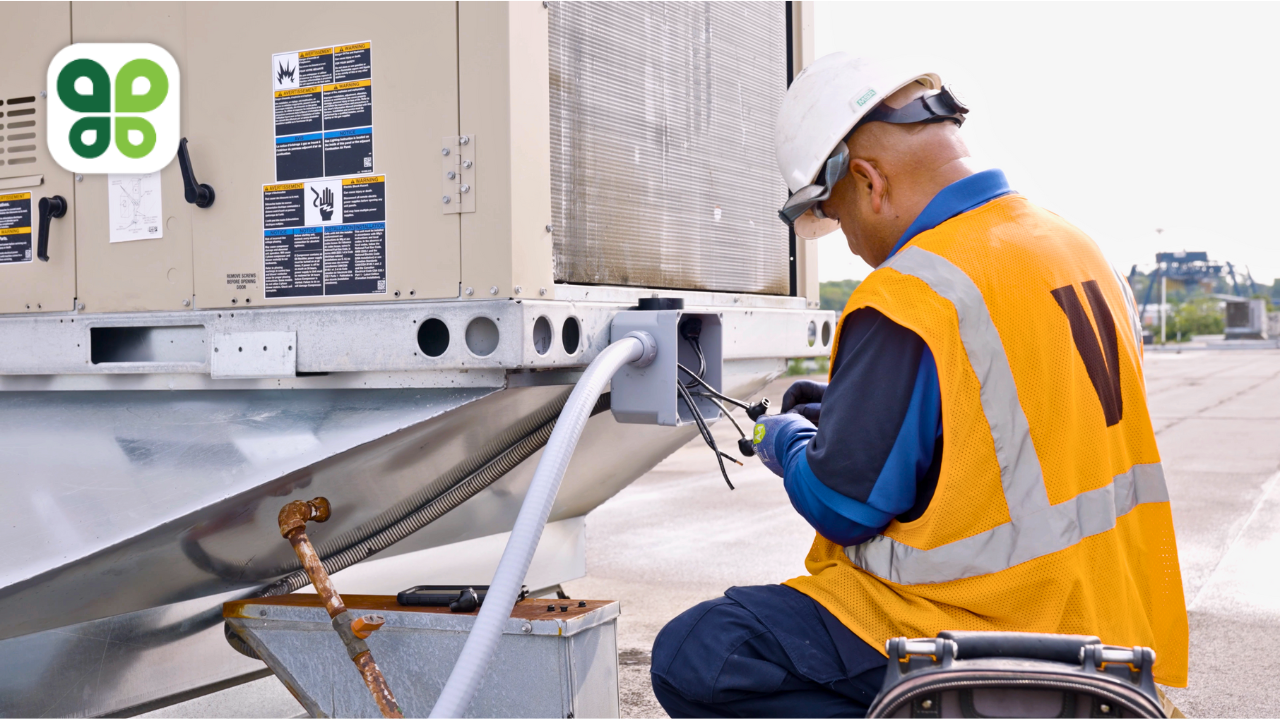
Outdated HVACs are bad for business. They burn through high levels of energy, blow up your energy bills, and require endless costly repairs to stay functional. But there’s another serious risk with old HVAC systems that isn’t spoken about as much: they can pose health issues for your employees and customers. Old HVAC health risks have real effects on people and business, which is why more and more people are making upgrading theirs a bigger priority.
## **Why do outdated HVACs negatively impact health?**
HVACs have a few important jobs. The most obvious one is that they regulate the temperature of a building, which helps to maintain comfort during periods of extreme weather. However, HVACs are also tasked with ventilating rooms and controlling humidity. These latter two tasks are critical to maintaining a healthy environment.
Unchecked humidity levels can cause mold, which, if you run a restaurant, is an obvious issue for food safety. But even simply having large amounts of mold spores in the air is a problem, as inhaling airborne mold can cause respiratory issues.
Plus, it’s not just mold: studies show that bad ventilation levels also result in [higher levels of bacteria growth](https://pmc.ncbi.nlm.nih.gov/articles/PMC9691097/#sec5-ijerph-19-15345).
Poor airflow can cause all types of pathogens to linger in the air, increasing the likelihood that people get sick. In extreme cases, a malfunctioning HVAC can cause “[sick building syndrome](https://www.healthline.com/health/sick-building-syndrome#causes),” where a high percentage of people in a building get ill or develop chronic symptoms from breathing in unclean air. Whether you’re running an office building, fast casual chain, or gym, the last thing you want is a sickly staff and customers.
Regular cleaning and maintenance of your HVAC system can help keep more serious issues at bay. But the best thing you can do to promote healthier air in your business is to replace old units with more high-efficiency models.
> *Which industries are most affected by poor HVAC health risks?*
>
> *Restaurants, retail stores, fitness centers, office buildings, schools, manufacturing plants, and healthcare-adjacent facilities rely on clean IAQ to protect staff and maintain compliance.*
## **Higher efficiency HVACs filter air better and promote health.**
When old HVAC units are replaced with more cutting-edge energy efficient units, the updated technology provides palpable health benefits. The most efficient HVACs don’t just use less energy, they are better at keeping optimal humidity levels and capturing dust, pollen, mold spores, and other contaminants to keep indoor air cleaner. After all, the “V” in HVAC stands for ventilation. A [high efficiency HVAC](https://www.budderfly.com/energy-service/equipment/) will perform better on all fronts.
> *High-efficiency systems → better humidity control → lower mold risk.*
There is a frequent misunderstanding that energy efficiency can lead to worse indoor air quality (IAQ). Because often, energy efficient systems can be designed to save energy by reducing ventilation.
But modern, more optimized systems implemented by experts are designed to get rid of *wasteful* ventilation while simultaneously optimizing the ventilation that is needed. An energy recovery ventilator, for example, balances temperature and humidity in a way that [reduces HVAC energy demand overall, while measurably improving IAQ](https://www.lg.com/levant_en/business/blog-list/lg-energy-recovery-ventilation-the-smart-choice-for-modern-buildings#:~:text=What%20is%20LG%20Energy%20Recovery,under%20the%20conditions%20specified%20below.&text=*%20The%20product%20model%20number%20is%20ZE050GUCCA0.).
> What is IAQ?
>
> IAQ is the indoor air quality of a building, measured by things like temperature, humidity, and the amount of pollutants in the air.
## **Avoiding fossil fuels leads to better air quality.**
On a more macro level, energy efficient HVACs also burn fewer fossil fuels and contribute less environmental pollution that also negatively affects community health.
One-tenth of U.S. carbon emissions come from burning fossil fuels for HVAC, water heating, and cooking. Such emissions take a toll on the health of people across the country.
In fact, the [American Lung Association’s 2025 State of the Air report](https://www.forbes.com/sites/jamiehailstone/2025/04/23/more-americans-exposed-to-unhealthy-air-pollution-levels-study-finds/) claims that nearly half of Americans are being regularly exposed to harmful levels of air pollution.
In recent years, people have grown more concerned with indoor air quality, largely due to post-pandemic air awareness. [72% of workers are worried about the indoor air quality of their workplace](https://www.honeywell.com/us/en/press/2022/02/honeywell-survey-reveals-72-of-office-workers-worldwide-worry-about-air-quality-in-their-buildings), according to one study. Another 2023 [report from Dyson](https://airqualitynews.com/headlines/report-shows-over-half-of-people-are-worried-about-air-quality-impacting-their-health/) found that more than half of people worry about how air impacts their health, while 48% of people believe indoor air quality is more important than outdoor.
Historically, many businesses have not prioritized clean air. But as we learn more about the negative impacts of ignoring poor ventilation and air quality, it’s become a clear imperative for business owners to ensure they are creating a safe environment.
Want healthier air without the high upfront costs of replacing equipment? Budderfly replaces old systems with high-efficiency HVACs, improves IAQ, and manages ongoing maintenance—at no capital expense for standard installations. [Contact us today to learn more](https://www.budderfly.com/lets-talk/).
---
### Recent Posts
#### [Commercial Building Energy Storage May Be the Grid's Biggest Opportunity](https://blog.budderfly.com/commercial-building-energy-storage-grid-opportunity)
Oct 13, 2026 11:41:40 AM
#### [5 Key Insights About How Sustainability Impacts Business Performance](https://blog.budderfly.com/new-york-climate-week-leadership-impact-forum-al-subbloie)
Oct 01, 2026 09:59:48 AM
#### [What Is Holding Back the Energy Transition? 10 Challenges Facing Building Owners](https://blog.budderfly.com/what-is-holding-back-the-energy-transition-10-challenges-facing-building-owners)
Sep 25, 2026 09:05:54 AM
### Contact us
Email: [info@budderfly.com](mailto:info@budderfly.com)
Phone: [(855) 299-1334](tel:(855)%20299-1334)
Address: 2 Trap Falls Road, Suite 300
Shelton, CT 06484
### Get updates straight to your inbox:
Subscribe to receive regular updates straight to your inbox.
[](https://omsbdrflyprd.wpengine.com/)
2 Trap Falls Road, Suite 310
Shelton, CT 06484
[(855) 299-1334](tel:855-299-1334)
[](https://cta-redirect.hubspot.com/cta/redirect/20472728/a6496eea-1348-4b02-942b-42039cf68f2c)
-
-
-
-
- - [Energy as a Service](https://omsbdrflyprd.wpengine.com/energy-service/)
- [Who We Serve](https://omsbdrflyprd.wpengine.com/the-budderfly-effect/)
- [Resources](https://omsbdrflyprd.wpengine.com/resources/)
- [Blog](https://blog.budderfly.com/)
- - [In the News](https://news.budderfly.com/)
- [Case Studies](https://case-studies.budderfly.com/)
- [About](https://omsbdrflyprd.wpengine.com/about/)
- [Careers](https://omsbdrflyprd.wpengine.com/careers/)
[](https://www.budderfly.com/)
© 2026 Budderfly
- [Privacy Policy](https://omsbdrflyprd.wpengine.com/privacy-policy/)
- [Accessibility Statement](https://omsbdrflyprd.wpengine.com/accessibility-statement/)
- [Sitemap](https://omsbdrflyprd.wpengine.com/sitemap/)
- [Patents](https://omsbdrflyprd.wpengine.com/patents/)
[](https://cta-redirect.hubspot.com/cta/redirect/20472728/b14da822-cd99-48ce-b039-a18781490a06)
```json
{
"@context" : "https://schema.org",
"@type" : "BlogPosting",
"author" : {
"@type" : "Person",
"name" : "Budderfly",
"url" : "https://blog.budderfly.com/author/budderfly"
},
"dateModified" : "2026-05-07T22:31:53.116Z",
"datePublished" : "2026-01-23T16:31:49.000Z",
"headline" : "The Air Quality Risks of Old HVAC Systems",
"image" : [ "https://blog.budderfly.com/hubfs/Blog-HVAC-Roof-1280x720.png" ],
"mainEntityOfPage" : {
"@id" : "https://blog.budderfly.com/health-risks-of-old-hvacs-for-employees-and-customers",
"@type" : "WebPage"
},
"publisher" : {
"@type" : "Organization",
"logo" : {
"@type" : "ImageObject",
"url" : "https://blog.budderfly.com/hubfs/Budderfly%20logos/Budderfly%20Logo%20w%20tage-2%20copy.png"
},
"name" : "Budderfly"
}
}
```
```json
{
"@context" : "https://schema.org",
"@type" : "FAQPage",
"mainEntity" : [ {
"@type" : "Question",
"acceptedAnswer" : {
"@type" : "Answer",
"text" : "Gyms often run long hours, have high ceilings, and carry heavy humidity loads from showers and workouts—forcing HVAC and ventilation to run harder than most businesses."
},
"name" : "Why is my gym’s electricity bill so high compared to other businesses?"
}, {
"@type" : "Question",
"acceptedAnswer" : {
"@type" : "Answer",
"text" : "Lighting can be a major slice of a gym’s energy use. LEDs cut lighting consumption significantly and reduce heat, which can also lower air-conditioning demand."
},
"name" : "How much can LED lighting actually save a fitness center?"
}, {
"@type" : "Question",
"acceptedAnswer" : {
"@type" : "Answer",
"text" : "Yes—some models (like Energy-as-a-Service) fund high-efficiency HVAC replacements upfront and are paid back through measured energy savings instead of CapEx."
},
"name" : "Can I upgrade my gym’s HVAC without a huge upfront payment?"
}, {
"@type" : "Question",
"acceptedAnswer" : {
"@type" : "Answer",
"text" : "Pools can drive energy costs due to constant filtration and heating. Variable-speed drives plus smart monitoring can reduce pump and heating energy without sacrificing comfort."
},
"name" : "How do swimming pools impact energy costs?"
}, {
"@type" : "Question",
"acceptedAnswer" : {
"@type" : "Answer",
"text" : "Peak demand charges are based on your highest usage spike in a billing cycle. Monitoring and load management can help smooth spikes and reduce demand-related costs."
},
"name" : "What are \"Peak Demand\" charges and how do gyms avoid them?"
} ]
}
```