---
title: Why Equipment Synergy Matters in QSR Efficiency
description: To unlock the full potential of energy savings in a QSR, systems synergy is needed so equipment can be coordinated and optimized for maximum impact.
image: https://blog.budderfly.com/hubfs/Blog-SystemsSynergy.png
---
[Careers](https://omsbdrflyprd.wpengine.com/careers/)
[](https://cta-redirect.hubspot.com/cta/redirect/20472728/b14da822-cd99-48ce-b039-a18781490a06)
[](https://omsbdrflyprd.wpengine.com/)
- [Energy as a Service](https://www.budderfly.com/energy-service/)
- [Equipment](https://www.budderfly.com/energy-service/equipment/)
- [Smart Technology Monitoring](https://www.budderfly.com/our-technology/)
- [How We Innovate](https://www.budderfly.com/energy-service/how-we-innovate/)
- [Measuring & Billing Technology](https://www.budderfly.com/energy-service/measuring-billing-technology/)
- [Who We Serve](https://www.budderfly.com/the-budderfly-effect/)
- [Restaurants](https://www.budderfly.com/the-budderfly-effect/fast-casual-restaurants/)
- [Corporate & Enterprise](https://www.budderfly.com/the-budderfly-effect/enterprise/)
- [Hospitality](https://www.budderfly.com/the-budderfly-effect/hospitality/)
- [Healthcare & Fitness](https://www.budderfly.com/the-budderfly-effect/healthcare-fitness/)
- [Schools & Universities](https://www.budderfly.com/the-budderfly-effect/schools-universities/)
- [Retail](https://www.budderfly.com/the-budderfly-effect/chain-retail/)
- [Convenience Stores](https://www.budderfly.com/the-budderfly-effect/convenience-stores/)
- [Manufacturing](https://www.budderfly.com/the-budderfly-effect/manufacturing/)
- [Resources](https://blog.budderfly.com/)
- [Blog](https://blog.budderfly.com/)
- [Case Studies](https://case-studies.budderfly.com/)
- [Customer Testimonials](https://www.budderfly.com/resources/customer-testimonials/)
- [Thought Leadership](https://info.budderfly.com/)
- [News](https://news.budderfly.com/)
- [About](https://www.budderfly.com/about/)
- [Executive Team](https://www.budderfly.com/executive-team/)
- [Leadership](https://www.budderfly.com/leadership/)
- [Board of Directors](https://www.budderfly.com/board-of-directors/)
- [Mission](https://www.budderfly.com/about/mission/)
[](https://cta-redirect.hubspot.com/cta/redirect/20472728/f27e5725-ac20-4a22-8db5-60c912879eb9)
- [Energy as a Service](https://www.budderfly.com/energy-service/)
- [Equipment](https://www.budderfly.com/energy-service/equipment/)
- [Smart Technology Monitoring](https://www.budderfly.com/our-technology/)
- [How We Innovate](https://www.budderfly.com/energy-service/how-we-innovate/)
- [Measuring & Billing Technology](https://www.budderfly.com/energy-service/measuring-billing-technology/)
- [Who We Serve](https://www.budderfly.com/the-budderfly-effect/)
- [Restaurants](https://www.budderfly.com/the-budderfly-effect/fast-casual-restaurants/)
- [Corporate & Enterprise](https://www.budderfly.com/the-budderfly-effect/enterprise/)
- [Hospitality](https://www.budderfly.com/the-budderfly-effect/hospitality/)
- [Healthcare & Fitness](https://www.budderfly.com/the-budderfly-effect/healthcare-fitness/)
- [Schools & Universities](https://www.budderfly.com/the-budderfly-effect/schools-universities/)
- [Retail](https://www.budderfly.com/the-budderfly-effect/chain-retail/)
- [Convenience Stores](https://www.budderfly.com/the-budderfly-effect/convenience-stores/)
- [Manufacturing](https://www.budderfly.com/the-budderfly-effect/manufacturing/)
- [Resources](https://blog.budderfly.com/)
- [Blog](https://blog.budderfly.com/)
- [Case Studies](https://case-studies.budderfly.com/)
- [Customer Testimonials](https://www.budderfly.com/resources/customer-testimonials/)
- [Thought Leadership](https://info.budderfly.com/)
- [News](https://news.budderfly.com/)
- [About](https://www.budderfly.com/about/)
- [Executive Team](https://www.budderfly.com/executive-team/)
- [Leadership](https://www.budderfly.com/leadership/)
- [Board of Directors](https://www.budderfly.com/board-of-directors/)
- [Mission](https://www.budderfly.com/about/mission/)
[Careers](https://omsbdrflyprd.wpengine.com/careers/)
[](https://cta-redirect.hubspot.com/cta/redirect/20472728/b14da822-cd99-48ce-b039-a18781490a06)
Sep 17, 2025
# Systems Synergy: The Fastest Path to Energy Efficiency Gains in QSRs
By: Vishal Patwari
Quick-service restaurants (QSRs) are some of the most energy-intensive businesses in the commercial sector. Between refrigeration, cooking, ventilation, and HVAC, these sites run every major building system at high loads, often simultaneously.
Upgrading to efficient equipment is a step in the right direction. [High-SEER HVAC units, demand-controlled kitchen ventilation (DCKV), and modern refrigeration](https://www.budderfly.com/energy-service/equipment/) all use less energy and deliver measurable benefits. But the reality is this: **energy efficiency in isolation only scratches the surface.**
To unlock the *full potential of savings*, these systems must operate in *synergy,* coordinated and optimized as a single ecosystem.
## **What Does “Systems Synergy” Mean?**
Systems synergy happens when equipment does not just operate efficiently on its own but also communicates and adjusts in coordination with other systems. Instead of HVAC, Energy Recovery Ventilators (ERVs), variable refrigerant flow systems (VRFs), refrigeration, and ventilation working independently, they share information and balance loads to minimize waste and improve reliability.
For QSRs, whose margins are tight and operations are complex, this synergy makes the difference between incremental savings and true transformation.
## **The Benefits of Systems Synergy in QSRs**
### **1. Holistic Load Management**
QSRs constantly balance opposing thermal demands: hot kitchens, cooler dining rooms, and heavy drive-thru use. If HVAC, ventilation, and cooking systems are not coordinated, one system often negates the savings of another.
By integrating systems, demand-controlled ventilation reduces unnecessary exhaust, and HVAC only conditions the air truly needed in cutting energy use without sacrificing comfort.
### 2. **Eliminating Redundancy and Waste**
Synergy allows equipment to **work together instead of against each other**.
- Heat rejected from refrigeration can be captured for water heating.
- Internal heat from cooking equipment can be factored into HVAC operation.
Without integration, these energy flows are wasted instead of recycled.
### **3. Consistent Comfort and Reliability**
Efficiency is not only about reducing energy usage and emissions. It is also about maintaining stable, comfortable conditions for customers and staff.
When VRF systems, ERVs, and ventilation controls work together, humidity swings are minimized,[indoor air quality improves](https://blog.budderfly.com/how-ventilation-impacts-air-quality-in-restaurants), and issues like condensate leaks or sweating cassettes are greatly reduced.
### **4. Peak Demand Reduction and Grid Stability**
[Utility bills for QSRs](https://www.budderfly.com/the-budderfly-effect/fast-casual-restaurants/)often include high charges for peak demand. Coordinated systems can stage equipment use, pre-cool spaces before busy hours, and stagger operations to flatten load profiles.
The result is not only lower demand charges, but also a more resilient grid that minimizes risk of adverse events, to keep operations running smoothly.
### **5. Smarter, Data-Driven Operations**
With a unified platform collecting and analyzing data from all systems, operators gain powerful tools for optimization.
- Real-time adjustments: If the dining room is empty, HVAC and ventilation can scale back automatically.
- Fault detection: If a VRF unit goes on standby, the system can cross-reference kitchen loads to diagnose issues before they affect customers.
Data integration turns system synergy into ongoing performance optimization.
## **The ROI of Synergy**
Individually, efficiency upgrades may yield 5–10% energy savings. But when systems are truly integrated, **savings can reach 20–30%**, with faster payback periods and stronger sustainability outcomes.
For brands operating dozens or hundreds of locations, this translates into significant monetary impact and a [powerful sustainability story to share with customers and stakeholders](https://blog.budderfly.com/how-to-use-the-budderfly-customer-portal-to-tell-your-sustainability-stories).
## **Efficiency Beyond Equipment**
Quick-service restaurants face some of the toughest energy challenges in the commercial sector. **True efficiency does not come from efficient equipment alone. It comes from systems that work together in synergy.**
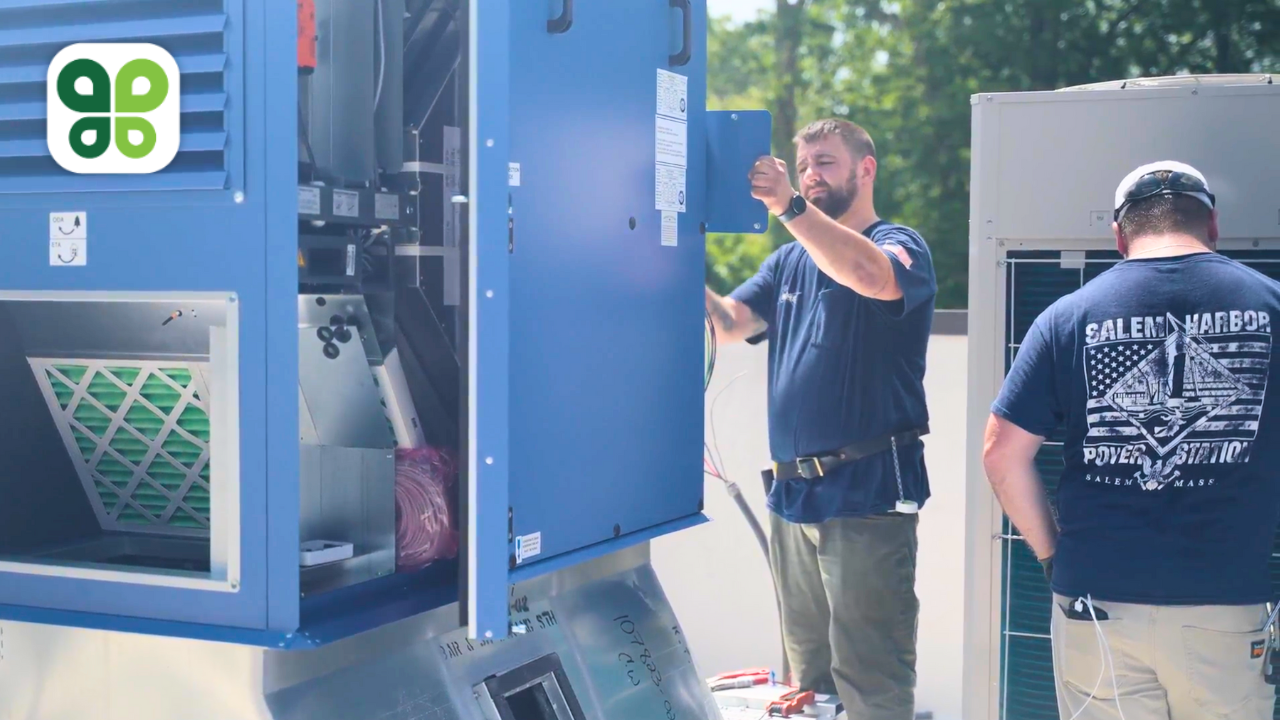
At Budderfly, our [Ultra-High-Performance (UHP) solutions](https://www.youtube.com/watch?v=oSY06e_hHfo) are designed with this principle at the core. By integrating HVAC, ERVs, VRFs, DCKV, and refrigeration into one coordinated ecosystem, we help QSRs move beyond incremental efficiency gains to achieve meaningful, lasting transformation.
Because when systems are in synergy, energy efficiency is not just possible, it is optimized.
---
### Recent Posts
#### [Commercial Building Energy Storage May Be the Grid's Biggest Opportunity](https://blog.budderfly.com/commercial-building-energy-storage-grid-opportunity)
Oct 13, 2026 11:41:40 AM
#### [5 Key Insights About How Sustainability Impacts Business Performance](https://blog.budderfly.com/new-york-climate-week-leadership-impact-forum-al-subbloie)
Oct 01, 2026 09:59:48 AM
#### [What Is Holding Back the Energy Transition? 10 Challenges Facing Building Owners](https://blog.budderfly.com/what-is-holding-back-the-energy-transition-10-challenges-facing-building-owners)
Sep 25, 2026 09:05:54 AM
### Contact us
Email: [info@budderfly.com](mailto:info@budderfly.com)
Phone: [(855) 299-1334](tel:(855)%20299-1334)
Address: 2 Trap Falls Road, Suite 300
Shelton, CT 06484
### Get updates straight to your inbox:
Subscribe to receive regular updates straight to your inbox.
[](https://omsbdrflyprd.wpengine.com/)
2 Trap Falls Road, Suite 310
Shelton, CT 06484
[(855) 299-1334](tel:855-299-1334)
[](https://cta-redirect.hubspot.com/cta/redirect/20472728/a6496eea-1348-4b02-942b-42039cf68f2c)
-
-
-
-
- - [Energy as a Service](https://omsbdrflyprd.wpengine.com/energy-service/)
- [Who We Serve](https://omsbdrflyprd.wpengine.com/the-budderfly-effect/)
- [Resources](https://omsbdrflyprd.wpengine.com/resources/)
- [Blog](https://blog.budderfly.com/)
- - [In the News](https://news.budderfly.com/)
- [Case Studies](https://case-studies.budderfly.com/)
- [About](https://omsbdrflyprd.wpengine.com/about/)
- [Careers](https://omsbdrflyprd.wpengine.com/careers/)
[](https://www.budderfly.com/)
© 2026 Budderfly
- [Privacy Policy](https://omsbdrflyprd.wpengine.com/privacy-policy/)
- [Accessibility Statement](https://omsbdrflyprd.wpengine.com/accessibility-statement/)
- [Sitemap](https://omsbdrflyprd.wpengine.com/sitemap/)
- [Patents](https://omsbdrflyprd.wpengine.com/patents/)
[](https://cta-redirect.hubspot.com/cta/redirect/20472728/b14da822-cd99-48ce-b039-a18781490a06)
```json
{
"@context" : "https://schema.org",
"@type" : "BlogPosting",
"author" : {
"@type" : "Person",
"name" : "Budderfly",
"url" : "https://blog.budderfly.com/author/budderfly"
},
"dateModified" : "2026-05-19T19:20:18.575Z",
"datePublished" : "2025-09-17T10:16:00.000Z",
"headline" : "Why Equipment Synergy Matters in QSR Efficiency",
"image" : [ "https://blog.budderfly.com/hubfs/Blog-SystemsSynergy.png" ],
"mainEntityOfPage" : {
"@id" : "https://blog.budderfly.com/systems-synergy-energy-efficiency-qsrs",
"@type" : "WebPage"
},
"publisher" : {
"@type" : "Organization",
"logo" : {
"@type" : "ImageObject",
"url" : "https://blog.budderfly.com/hubfs/Budderfly%20logos/Budderfly%20Logo%20w%20tage-2%20copy.png"
},
"name" : "Budderfly"
}
}
```
```json
{
"@context" : "https://schema.org",
"@type" : "FAQPage",
"mainEntity" : [ {
"@type" : "Question",
"acceptedAnswer" : {
"@type" : "Answer",
"text" : "Gyms often run long hours, have high ceilings, and carry heavy humidity loads from showers and workouts—forcing HVAC and ventilation to run harder than most businesses."
},
"name" : "Why is my gym’s electricity bill so high compared to other businesses?"
}, {
"@type" : "Question",
"acceptedAnswer" : {
"@type" : "Answer",
"text" : "Lighting can be a major slice of a gym’s energy use. LEDs cut lighting consumption significantly and reduce heat, which can also lower air-conditioning demand."
},
"name" : "How much can LED lighting actually save a fitness center?"
}, {
"@type" : "Question",
"acceptedAnswer" : {
"@type" : "Answer",
"text" : "Yes—some models (like Energy-as-a-Service) fund high-efficiency HVAC replacements upfront and are paid back through measured energy savings instead of CapEx."
},
"name" : "Can I upgrade my gym’s HVAC without a huge upfront payment?"
}, {
"@type" : "Question",
"acceptedAnswer" : {
"@type" : "Answer",
"text" : "Pools can drive energy costs due to constant filtration and heating. Variable-speed drives plus smart monitoring can reduce pump and heating energy without sacrificing comfort."
},
"name" : "How do swimming pools impact energy costs?"
}, {
"@type" : "Question",
"acceptedAnswer" : {
"@type" : "Answer",
"text" : "Peak demand charges are based on your highest usage spike in a billing cycle. Monitoring and load management can help smooth spikes and reduce demand-related costs."
},
"name" : "What are \"Peak Demand\" charges and how do gyms avoid them?"
} ]
}
```