

Inside Viridi: Where Batteries, People and Innovation Come Together
By: Megan Fullagar, Senior Director, Brand Marketing at Budderfly
I recently had the opportunity to visit Viridi, Budderfly’s battery partner, at their factory in Buffalo, New York. Together, we are working to deploy our first 100 Budderfly-managed commercial sites across the United States. I had heard a lot about the work happening at Viridi, but there is something different about seeing it for yourself. The scale and innovation of Viridi’s manufacturing is truly impressive.
From 40 Hours to 45 Minutes: Innovative Manufacturing
The factory sits on a large industrial site alongside several other major manufacturers. Inside, it was impossible not to be struck by everything happening on the factory floor. Rows of equipment stretch across the building. There is constant motion with robots moving, assembling and checking components along the way.
Mark Batorski, Viridi's Operations Manager, walked me through the process and explained how much the manufacturing operation has changed over the past three years.
Not long ago, building one of these battery packs was almost entirely manual, he told me. Teams would stack modules, add spacers and other components, and build each pack by hand. The process could take around 40 hours. Today, the cycle time of the line is 45 minutes.
That increased speed is impressive, but I was struck by how all this work is accomplished with the utmost care and supervision. The factory isn't exclusively full of robots. Human oversight is built into nearly every stage of the process. Cameras verify components are where they should be. Every cell is tested and sorted before entering a module. Welds are monitored. Torque tools track how components are fastened. Operators perform visual inspections, and the battery is tested again at both the module and pack level.
Mark described the approach as essentially "verify and move on." The machines do their part, the data is captured, and people step in where human judgment matters. Operators work alongside the equipment, monitoring the process, and looking for anything that doesn't seem quite right. That combination of automation and human oversight is what makes the operation so seamless.
Building Batteries to Meet Growing Demand
Another important aspect of Viridi’s plant is that the factory has intentionally been designed for scale. Viridi currently has two production lines, with room for two more in the building. There is also another building on the property that can support additional capacity as demand quickly grows.
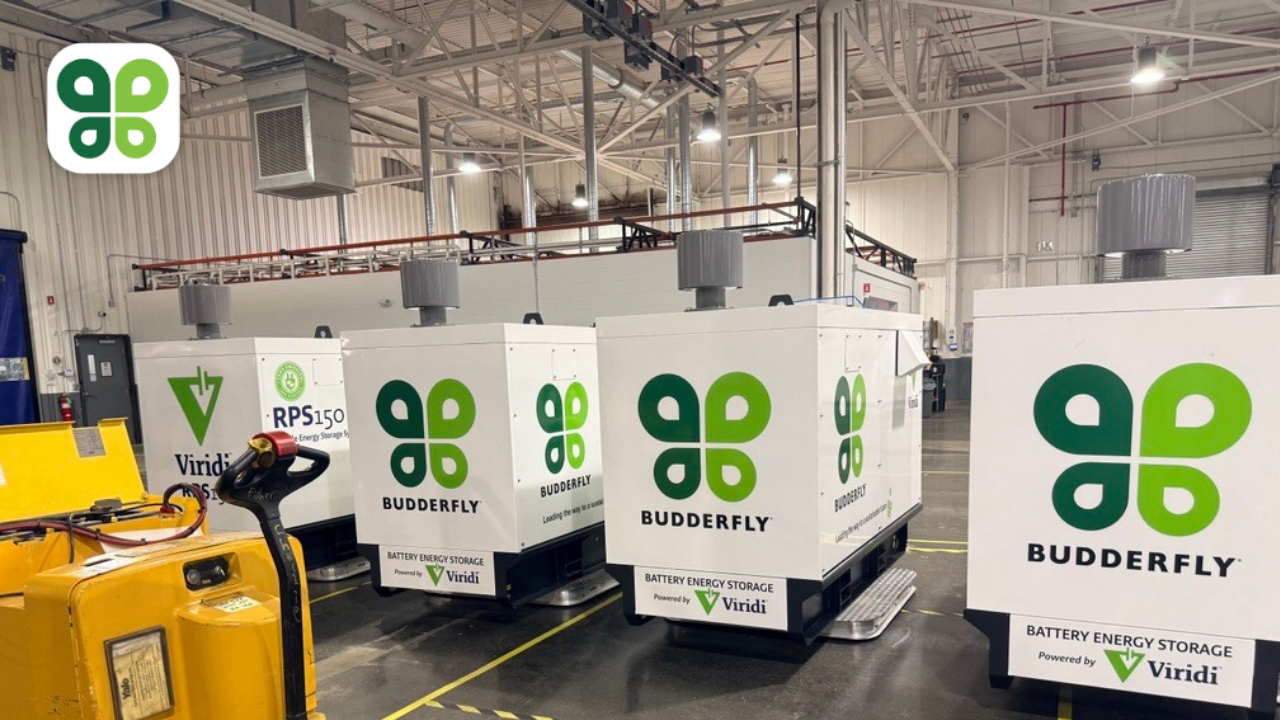
The batteries produced here are already making their way into the field. Budderfly's batteries have been shipped to sites in Connecticut and Massachusetts, with additional units headed to California. Standing on the factory floor, I found it exciting to imagine the journey those batteries were about to take. What started as individual cells and components would soon be sitting outside a commercial building, helping that business to better manage its energy.
Building a Stronger Community and Workforce
I spoke to Viridi's Integrated Marketing Lead, Lisa Courtney-Homes, who showed me to the factory floor.
Lisa shared something that stuck with me. Viridi partners with GreenForce Training, a local nonprofit that recruits and trains people from underserved and disadvantaged communities, including formerly incarcerated individuals and displaced energy workers. The program creates opportunities for people to build skills, find meaningful work and develop career paths.
It was one of the first things I noticed about Viridi. Community isn't just a line in the company's messaging. It’s at the core of how they operate, both in how they build their company culture and how they contribute to the city they’re headquartered in, Buffalo, NY.
Budderfly and Viridi: A Partnership for a Sustainable Future
Walking through Viridi gave me a much better understanding of what it takes to bring a battery from an idea to something that can actually be deployed in the real world. It takes engineering and manufacturing. It takes automation and data. It takes quality control and safety. And it takes people who know how to build, test, and improve the process.
For Budderfly, our partnership with Viridi is part of a much bigger effort to bring energy solutions to commercial businesses across the country. Being able to see where those batteries are made, meet the people building them and understand the work happening behind the scenes made that partnership feel much more tangible.
I left the factory thinking about how many different pieces must come together to make something like this possible.
Humans and robots, engineers and operators, manufacturers, energy companies, customers, the local community: They all work together to build a more efficient and sustainable energy future. That's what innovation looks like to me.