

Case Study Roundup: How Fitness Brands Can Reduce HVAC Downtime and Improve Comfort Across 50+ Locations
Gyms don’t provide their customers with fitness. What they offer is an environment that empowers them to become fit. Exercise equipment is just a small part of what cultivates that environment. Comfort and hygiene are two major factors in running a successful gym business. In other words, the most important equipment at a gym isn’t the treadmills—it’s the HVACs.
Comfort is crucial to make working out safe and enjoyable, and some of the most frequent member complaints are around temperature and humidity. So, gyms need to have high-performance HVAC systems that can condition air around the clock.
HVAC downtime can be a serious problem for gyms, disrupting classes, frustrating members during high-traffic hours, and increasing emergency spend as managers seek immediate repairs from emergency technicians. Downtime prevention is a key reason gyms upgrade their HVACs to high efficiency models. Old, inefficient machinery is more likely to break down, while modern units that are routinely maintained have a much lower risk of downtime.
This roundup of case studies shows how fitness operators have improved comfort and reduced downtime across nearly 100 locations using an energy-as-a-service approach.
Why HVAC downtime hits fitness brands harder than most industries
HVAC performance is a high stakes aspect of every fitness facility. Members expect a comfortable environment, and the temperature in a gym can impact not only their enjoyment, but their health. If temperatures are too high, people can overheat and get dehydrated. If temperatures dip too low, there’s an increased risk of injury while working out.
Plus, HVACs do more than regulate temperature, they also regulate humidity, another vital aspect of member comfort, air quality, and hygiene in busy gym facilitates.
HVAC downtime increases the risk of a poor environment and member complaints and drives up emergency repair costs.
HVAC downtime impact:
- Member dissatisfaction and lower retention
- Negative reviews on social media
- Staff stress
- After-hours emergency costs
What “comfort consistency” means in fitness, and the simplest metrics to track
Comfort consistency means providing an optimal, predictable environment at all opening hours for your gym members. It’s not just having your HVACs on and running. It entails high performance of systems at all times, even during the busiest hours that puts the biggest strain on machinery.
Comfort consistency can be measured by temperature stability across different zones in your facility, humidity stability, and energy consumption data. This operational data can provide insights into how your HVACs are performing and help identify problems that can be solved before any equipment breaks down.
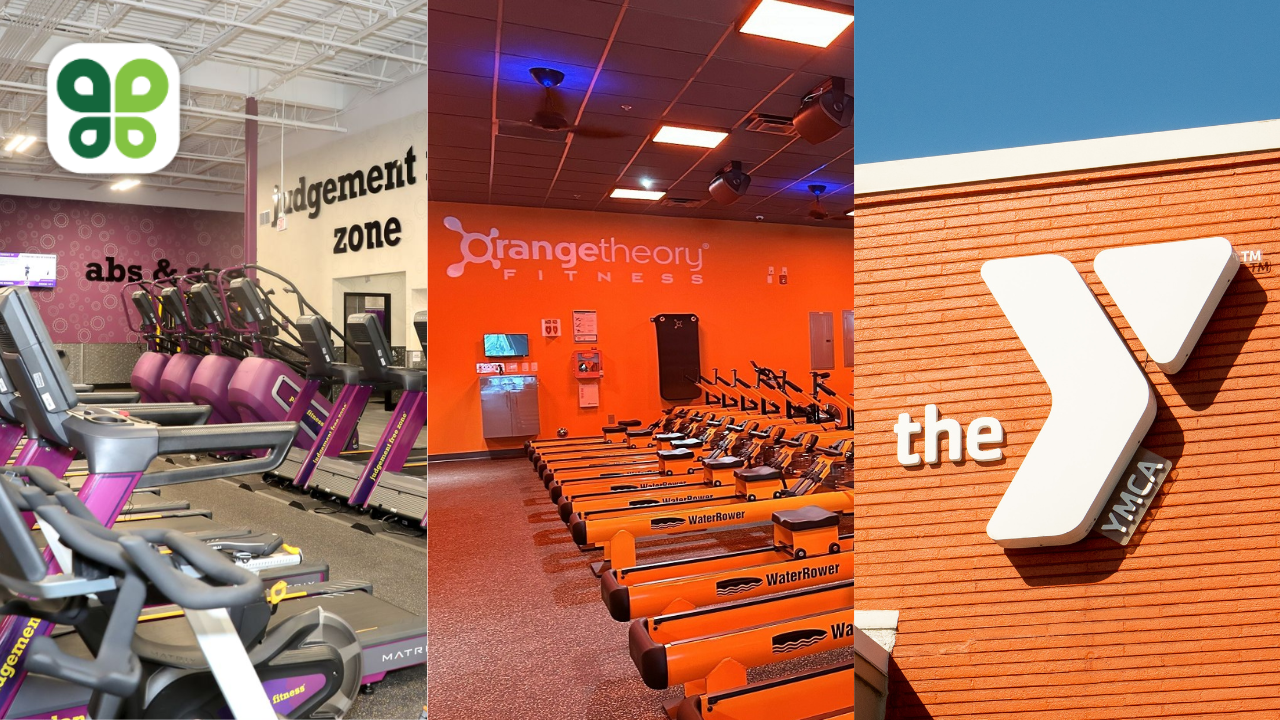
Case Study #1 — Orangetheory + Empire Portfolio Group: reducing downtime across 53 enrolled studios
Empire Portfolio Group (EPG) is one of Orangetheory Fitness’s largest franchise operators, with more than 60 locations. Aging HVAC units performed inconsistently, increasing maintenance costs and causing unplanned downtime.
In 2022, EPG partnered with Budderfly to implement high-quality, energy-saving equipment upgrades with no upfront costs and gain expert monitoring of energy systems for maximum efficiency. Budderfly has replaced HVAC systems across more than 50 studios, reducing HVAC downtime, providing ongoing multi-site HVAC management to help ensure comfort stability, and lowering long-term operating costs.
What made the Orangetheory rollout scalable (and repeatable) across dozens of sites
The EPG/Orangetheory partnership demonstrates why Budderfly’s energy-as-a-service model is ideal for multi-site operators. Because Budderfly covered the cost of all upgrades and installations, EPG can preserve capital for strategic investments, such as expanding its footprint, improving equipment, and supporting its people. Budderfly took ownership of energy bills and system performance, using continuous monitoring to ensure equipment operates at peak efficiency and with minimal downtime. Plus, Budderfly’s repeatable model allowed EPG to seamlessly onboard dozens of studios.
Case Study #2 — YMCA of Greensboro: six-location program built around outsourcing + upgrades
Budderfly invested over $1.2 million in energy efficient upgrades for the YMCA of Greensboro, including HVAC enhancements, LED lighting, smart thermostats, and more. This enabled the YMCA’s six locations to get optimized facilities and ongoing energy management with no upfront costs.
Plus, Budderfly monitors the HVAC equipment and thermostats across all 6 locations to simplify multi-site facilities management. Providing deep insights, Budderfly ensures the perfect balance of ongoing member and employee comfort with less energy waste. Using the Budderfly Customer Portal, the leadership team can see data on how the equipment works to keep the facilities as energy efficient as possible.
|
The Results |
|
| Gym locations | 6 |
| Budderfly invested | $1.2 million |
| Energy saved | 1,700,000 kWh in the first 3 years |
Case Study #3 — Planet Fitness + Ohana: a scalable solution for existing locations and new builds
Planet Fitness franchise operator Ohana Growth Partners partnered with Budderfly in 2925 to modernize infrastructure across nearly half its portfolio, a mix of old and newly built gyms. Budderfly has deployed 123 energy-efficient upgrades and invested $835,000 in the Planet Fitness facilities, allowing them to optimize energy performance and preserve capital.
Budderfly also provides ongoing management to ensure consistent performance and avoid HVAC downtime.
The common pattern across nearly 100 locations
Three brands, different geographies, nearly 100 locations. What do these case studies share? By upgrading their facilities with energy efficient equipment and HVAC upgrades, these brands are creating a better environment for their patrons.
By partnering with Budderfly, they are getting crucial insights into energy performance that will detect issues earlier and keep performance steady. They are getting HVAC preventive maintenance to reduce the risk of breakdowns and emergency calls. They’re getting a hands-on energy management partnership that will guarantee positive outcomes for years to come.
Which upgrades most often improve comfort and reduce downtime in fitness facilities
- High-efficiency HVAC upgrades: Replacing outdated HVAC units with high-efficiency models ensures better temperature and humidity regulation while using a fraction of the energy.
- Smart thermostats for gyms: Smart thermostats provide environmental comfort by controlling the heating, cooling, air flow, and even humidity of a space with enhanced features including setpoint scheduling and limits, remote control monitoring and reporting.
- Energy management technology: Smart energy monitoring software can provide real-time alerts for things you can quickly solve, including usage spikes, open refrigerator doors, too high or too low temps, inefficiently running equipment, and issues requiring technical support.
- Comprehensive upgrades: Facility upgrades work better in tandem, so in addition to HVAC replacements, LED lighting, water conservation solutions, refrigeration controls, solar and batteries can help create a waste-free facility that’s more comfortable in every way.
Poor performance and HVAC downtime can put a big damper on member trust and retention. Outdated equipment is inefficient and poses a higher risk of breakdowns. Updating facilities with high efficiency equipment can help improve facilities and ensure comfort in the long term. Working with an energy-as-a-service provider like Budderfly can help gyms access these upgrades without upfront capital required. Budderfly’s model has proven scalability and is ideal for multi-location operators. Plus, Budderfly oversees energy management to ensure ongoing performance with preventative maintenance and ongoing monitoring.
To learn how Budderfly can help improve comfort at your gym, contact one of our experts today.
FAQs
1) What causes HVAC downtime most often in gyms and fitness studios?
HVAC downtime in gyms is most often caused by aging rooftop units (RTUs), inconsistent preventive maintenance, control/thermostat failures, and undetected performance issues that escalate into breakdowns. Fitness facilities are especially vulnerable because high occupancy, heat loads, and humidity swings put constant stress on HVAC systems, making small issues turn into urgent outages quickly.
2) How do multi-site fitness brands reduce HVAC downtime across dozens of locations?
Multi-site fitness brands reduce HVAC downtime by combining proactive monitoring, standardized maintenance workflows, and targeted HVAC replacements across the portfolio. In Budderfly’s Orangetheory + Empire Portfolio Group program, the operator enrolled 53 locations, pairing monitoring and maintenance with high-efficiency HVAC replacements to reduce downtime and stabilize comfort.
3) What’s the fastest way to reduce temperature and humidity complaints in fitness facilities?
The fastest way to reduce temperature and humidity complaints is to implement HVAC controls + continuous monitoring, so problems are detected early and corrected before members feel them. Smart controls (like thermostats and scheduling) help prevent overcooling/overheating, while monitoring helps teams catch drifting performance (like rising humidity) before it becomes a recurring complaint. In the YMCA of Greensboro case, the program included smart thermostats and HVAC enhancements across multiple sites.
4) How do you standardize HVAC improvements across franchises or multi-location fitness portfolios?
To standardize HVAC improvements across a portfolio, operators typically use a repeatable rollout plan: assess sites, prioritize the worst performers, deploy a consistent upgrade package, and manage performance centrally with shared reporting. The Orangetheory + Empire Portfolio Group case is a portfolio example, with 53 locations enrolled and a repeatable approach that included 16 high-efficiency HVAC installs (with more planned).
5) Can HVAC and efficiency upgrades be done without disrupting members or classes?
Yes; many HVAC and efficiency upgrades can be completed with minimal or no disruption when work is scheduled off-hours, phased by zone, and coordinated location-by-location. One YMCA case study specifically states upgrades were completed quickly with no disruptions to member services, showing that operational continuity is achievable with the right planning.
6) What upgrades typically deliver the biggest comfort and reliability improvements in gyms?
The upgrades that most often improve comfort and reliability in gyms are high-efficiency HVAC (or RTU replacements), modern controls/smart thermostats, and ongoing monitoring. These upgrades reduce breakdown risk, stabilize temperature and humidity, and help teams resolve issues before they become member-facing problems. Budderfly’s case studies repeatedly reference HVAC enhancements and controls as core levers in fitness and YMCA environments.
7) What metrics prove HVAC downtime and comfort actually improved after changes?
The most useful proof metrics are HVAC downtime hours, time-to-repair, repeat service calls, and comfort complaint frequency, plus trend data for temperature and humidity stability. For broader performance, operators also track energy outcomes; one YMCA case study reports a 16.6% energy reduction with 82,200 kWh and $8,220 saved annually, which supports the value of operational improvements alongside comfort.
8) How can facilities teams prevent “repeat failures” where the same locations keep breaking down?
Facilities teams prevent repeat failures by using continuous monitoring + preventive maintenance triggers (not just calendar-based maintenance). That means fixing root causes—like recurring compressor strain, airflow issues, or control drift—before they trigger another outage. The Orangetheory + Empire Portfolio Group case highlights proactive monitoring and maintenance as a pathway to reduced downtime and more consistent comfort across many locations.
9) What’s the difference between a one-time HVAC replacement and a long-term uptime strategy?
A one-time HVAC replacement upgrades equipment, but a long-term uptime strategy combines upgrades + ongoing monitoring + maintenance so performance stays consistent and problems are caught early. This matters in fitness portfolios where comfort issues can reappear even after installs if systems aren’t monitored and tuned. Budderfly’s fitness and case study materials emphasize ongoing oversight as part of maintaining comfort and reducing downtime.
10) Why should CFOs care about HVAC downtime in multi-site fitness operations?
CFOs care because HVAC downtime creates unplanned spend (emergency repairs), revenue risk (class cancellations and refunds), and reputation risk (reviews and churn). A portfolio approach can convert unpredictable repair spikes into more manageable operating planning while improving member experience. The case studies show multi-site programs (like 53 enrolled studios or six YMCA locations) built around stabilizing performance at scale.